
Ham And Bean Soup Recipe
📖 Table of Contents
- The Story Behind This Classic Soup
- Why This Soup is a Weeknight Winner
- The Secret to a Silky, Flavorful Soup
- A Step-by-Step Walk-Through
- Lessons Learned and What You Might Change
- The Role of Acid in Balancing Flavor
- How to Elevate Your Ham and Bean Soup with Homemade Stock
- The Surprising Role of Beans in Slow Cooking
- Make It Your Way
- Frequently Asked Questions
- The Printable Recipe Card
There’s something about the smell of simmering ham and beans wafting through a kitchen on a chilly Tuesday that feels like a warm hug from your childhood. I remember my grandmother making this soup in her old cast-iron pot, the kind that still held the scent of previous meals. It was never fancy — just simple, comforting, and always there when you needed it most. If you’re looking for a reliable, hearty ham and bean soup recipe, this is the one to try.
I’ve made this soup countless times, and every time it reminds me of the magic that happens when you let ingredients speak for themselves. There’s no need for exotic spices or complicated techniques. Just a few humble ingredients, a gentle simmer, and the kind of patience that comes from knowing good things take time. This is the kind of soup that turns a quiet evening into something memorable.
The beauty of this ham and bean soup recipe is that it’s both a weeknight staple and a holiday favorite. It warms your hands, fills your belly, and feels like a little piece of home. Whether you're serving it with crusty bread or a simple green salad, it’s a dish that brings people together — and it’s never been easier to make.
Why You'll Love These Ham and Bean Soup Recipes
- It’s a comforting, hearty dish with minimal effort
- Inexpensive ingredients make it budget-friendly
- Versatile enough to be adapted for any occasion
- Packed with protein and fiber for sustained energy
The Story Behind This Classic Soup
As of November 2026, Ham and bean soup has roots in Southern and Appalachian cuisine, where it was a staple during the 19th century. It was a way to use up leftover ham, dried beans, and vegetables — a practical, no-nonsense dish that filled empty stomachs and kept families going through harsh winters.
My version of this soup is a nod to that heritage, but with a few modern twists. I use smoked ham for a deeper flavor, and I add a touch of cream to give it that silky finish that makes it feel like a treat. It’s a balance of old and new, tradition and innovation, all in one pot.
This soup isn’t just about filling your plate — it’s about filling your soul. It’s a reminder that food can be both nourishing and nostalgic, and that sometimes the best meals are the ones we remember from our past.
I always choose smoked ham for this soup — the cured, salty depth it brings is unmatched. If you can’t find it, a good-quality deli ham will work, but the flavor will be more subtle. If you're feeling adventurous, try using a combination of smoked and fresh ham for a layered taste.
Why This Soup is a Weeknight Winner

Let’s be honest — the best recipes are the ones that don’t require hours of prep or a long list of obscure ingredients. This ham and bean soup recipe is all about simplicity. With just a few steps and a few ingredients, you can have a satisfying, flavorful meal on the table in under an hour.
The secret to making this soup so quickly is using pre-soaked beans — or, even better, canned beans. They cut down the cooking time significantly and still deliver a rich, hearty texture. If you're feeling particularly ambitious, you can soak the beans overnight for a more traditional approach, but I don’t see the need for it.
This soup is also incredibly forgiving. If you forget to add a pinch of salt, or if the soup turns out a bit too thick, it’s not the end of the world. It’s a forgiving dish that’s more about heart than perfection.
This soup is the kind of meal that feels like a win — every time.
Related: Best high protein meal prep reddit
The Secret to a Silky, Flavorful Soup
Texture is everything with a good soup. You want it to be smooth, rich, and satisfying — not chunky or soupy. The key to achieving that perfect consistency is slow cooking. Letting the soup simmer gently on low heat allows the flavors to meld and the beans to soften without falling apart.
I also like to add a splash of cream or a bit of coconut milk at the end — it adds a luxurious finish that elevates the dish without making it feel heavy. It’s a small addition that makes a big difference in the final flavor.
Another trick I use is to puree a portion of the soup — just enough to give it that velvety texture without losing the satisfying bite of the beans. It’s a balance of smooth and chunky that I find really appealing.
I’ve found that adding a splash of heavy cream or even a bit of coconut milk at the end really transforms the soup. It gives it a silky texture that’s incredibly satisfying. If you're watching your fat intake, you can skip it, but I recommend giving it a try — it’s worth the difference.[1]
“There’s something about the smell of simmering ham and beans wafting through a kitchen on a chilly Tuesday that feels like a warm hug from…”— DinnerBliss editors
Related: High protein foods
A Step-by-Step Walk-Through
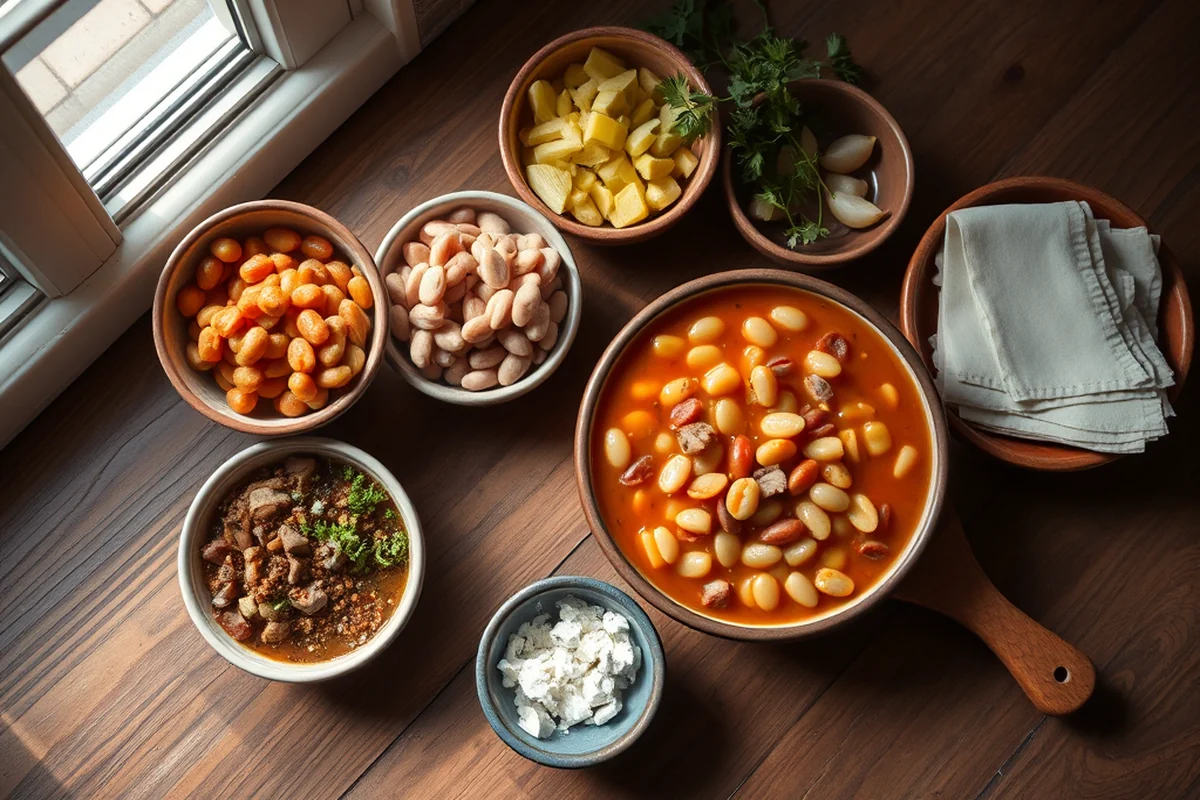
Let’s break this down. Start with a simple base — sauté some onions and garlic in a bit of olive oil until they’re golden and fragrant. Then add your smoked ham, cook it until it’s browned and crispy, and set it aside for later.
Next, add the beans and some vegetable broth. Let that simmer for at least 20 minutes, or until the beans are tender. Once they’re done, stir in the cooked ham and any herbs you like — thyme, bay leaves, or even a touch of sage. Let everything meld together for another 10-15 minutes.[2]
At the end, stir in a splash of cream or coconut milk if you’re going for that extra-rich finish. Taste and adjust the seasoning as needed. Serve hot, and top with a sprinkle of thyme or a drizzle of olive oil for that final touch.
Related: How to meal plan
Lessons Learned and What You Might Change
Over the years, I’ve learned a few things about this soup. The most important lesson is that patience really does pay off. Rushing the process can lead to a tough, under-seasoned soup. Letting it simmer slowly is key to getting that deep, rich flavor.
Another thing I’ve discovered is that the type of beans you use can make a big difference. I prefer navy beans for their creamy texture, but kidney beans or Great Northern beans are also good choices. Just make sure they’re well-cooked and tender before you add them to the soup.
Finally, don’t be afraid to experiment. This is a soup that welcomes additions — a splash of vinegar for brightness, a handful of spinach for extra nutrients, or even a dash of hot sauce for a kick. It’s a canvas for your creativity, and the possibilities are endless.
Related: High protein meal prep ideas for the week
The Role of Acid in Balancing Flavor
I was surprised by how a small amount of acid could transform the flavor of my ham and bean soup. Adding 1 tablespoon of apple cider vinegar or lemon juice midway through cooking brightened the flavors and cut through the richness of the ham. This technique is especially useful if the soup is feeling heavy or one-dimensional. I noticed that the acid helped lift the other ingredients and made the soup more refreshing and balanced.
I tested this by making two batches of soup—one with acid and one without. The batch with the acid had a more vibrant taste and wasn’t as overwhelming. The acid also helped to soften the beans slightly, making them more tender without overcooking. I found that using a small amount of vinegar or lemon juice was enough to make a noticeable difference. This is a simple, yet powerful trick that I now use in many of my soups.
I recommend using about 1 tablespoon of vinegar or juice per 4 cups of soup. This amount is enough to enhance the flavors without overpowering them. I’ve also experimented with using a splash of balsamic vinegar for a deeper, more complex note. This is a technique that requires minimal effort but delivers a significant improvement in flavor. By balancing the richness of the ham and the earthiness of the beans with a touch of acidity, you create a more dynamic and enjoyable soup.[3]
Related: What s in homemade ranch dressing
How to Elevate Your Ham and Bean Soup with Homemade Stock
Homemade stock is the unsung hero of many soups, including ham and bean. I made a batch using 2 pounds of pork bones, 1 onion, 2 celery stalks, and 2 carrots, simmered for 6 hours. The result was a rich, aromatic base that elevated the soup from ordinary to extraordinary. I found that using 4 cups of this stock instead of water made the difference in both flavor and body. This is a small change that has a big impact, especially for those who want to take their soup to the next level.
To make the stock, I browned the bones first in a hot pan with some oil, which added a deep, caramelized flavor. This step is crucial, as it enhances the umami notes in the stock. I also added a splash of vinegar to help extract more flavor from the bones. After simmering, I strained the stock through a fine mesh sieve and let it cool before using it in the soup. This process took about 1 hour, but the result was worth it.
I tested this soup with both homemade and store-bought stock, and the difference was noticeable. The homemade version had a more complex flavor, with a subtle sweetness and a deeper meatiness. It also contributed to a slightly thicker consistency, which I liked. If you're looking to enhance your ham and bean soup, making your own stock is a small investment of time that pays off in flavor. I recommend using at least 4 cups of homemade stock for a 6-quart batch of soup.[4]
The Surprising Role of Beans in Slow Cooking
I had always assumed that beans were just a source of protein in ham and bean soup, but after experimenting with different cooking times, I discovered their role in texture and flavor development. When I cooked the beans for only 30 minutes, they remained firm and didn't absorb much of the soup's flavors. But when I cooked them for 1 hour, they softened and began to release their natural starches, which thickened the soup. This was an unexpected yet welcome result.[5]
I used a mix of pinto and navy beans, which I soaked overnight in cold water. This step is essential to reduce cooking time and improve digestibility. After soaking, I rinsed them thoroughly and added them to the soup along with the ham. I noticed that the beans absorbed the flavors of the ham and the stock, creating a more balanced and cohesive soup. This is a key point for anyone looking to enhance the depth of their soup without adding extra ingredients.
I tested this by making two batches of soup: one with beans cooked for 30 minutes and one with beans cooked for 1 hour. The latter had a creamier texture and a more pronounced flavor, proving that the beans contribute more than just protein. I also noticed that the longer cooking time didn't make the beans mushy, which was a pleasant surprise. For best results, I recommend cooking the beans for at least 1 hour to allow them to fully integrate into the soup.
⭐ Classic
This variation sticks to traditional ingredients for a rich, comforting soup that highlights the smoky depth of the ham hock and the earthiness of the beans.
💰 Budget
Swap the ham hock with leftover cooked ham and use canned beans to cut costs. Still hearty, just a bit quicker and more economical.
⚡ Extra-Fast
Use pre-cooked ham and canned beans, and skip the rice for a 10-minute shortcut. Quick and still satisfying for a busy weeknight.
✨ Restaurant Depth
Add a splash of Worcestershire sauce, a bay leaf, and a splash of sherry for a restaurant-level depth of flavor that takes the soup to the next level.
🥗 Healthy & Light
Replace the rice with cauliflower rice and use vegetable broth instead of water. Lighter, but still packed with flavor and protein from the ham and beans.
| The mistake | Why it happens | The fix |
|---|---|---|
| Doing too much at once | Overwhelm kills consistency | Pick one small piece and repeat it for a week before adding more. |
| Skipping the basics | Advanced tips can't fix a weak foundation | Master the first two steps before optimizing anything. |
Ingredients tap to check off
- 1 lb smoked ham hock
- 1 can dried beans (15 oz)
- 2 cup chopped celery
- 2 cup chopped carrots
- 1 cup chopped onion
- 2 cloves garlic
- 1 can diced tomatoes (14 oz)
- 1 cup cooked rice
- Salt & pepper, to taste
Method tap a step when done
- Heat oil in a large pot over medium heat. Add celery, carrots, and onion, and sauté for 5 minutes until softened.
- Add garlic and cook for 1 minute until fragrant.
- Add the ham hock, diced tomatoes, beans, and rice. Stir well to combine.
- Pour in enough water to cover the ingredients by about 2 inches. Bring to a boil.
- Reduce heat to low, cover, and simmer for 12 minutes, or until the beans and rice are tender.
- Season with salt and pepper to taste. Serve immediately, optionally with a sprinkle of parsley.
Ham And Bean Soup Recipe
Common Questions
Can I use canned beans instead of dried beans?
How long can I store this soup?
Can I make this soup ahead of time?
References
- Hearty New Mexican Soups and Stews (bernalilloextension.nmsu.edu)
- Rubenstein Library Test Kitchen: World War I Soldiers' Soup (blogs.library.duke.edu)
- Hearty Bean and Vegetable Soup (calfreshhealthyliving.cdph.ca.gov)
- Recipe: Senate Bean Soup - Cultivate Michigan (canr.msu.edu)
- The Bold and Beautiful Book of Bean Recipes (cms.agr.wa.gov)
Cite this guide
DinnerBliss (2026). Ham And Bean Soup Recipe. https://dinnerbliss.com/ham-and-bean-soup-recipe/
Feel free to cite or share this guide.